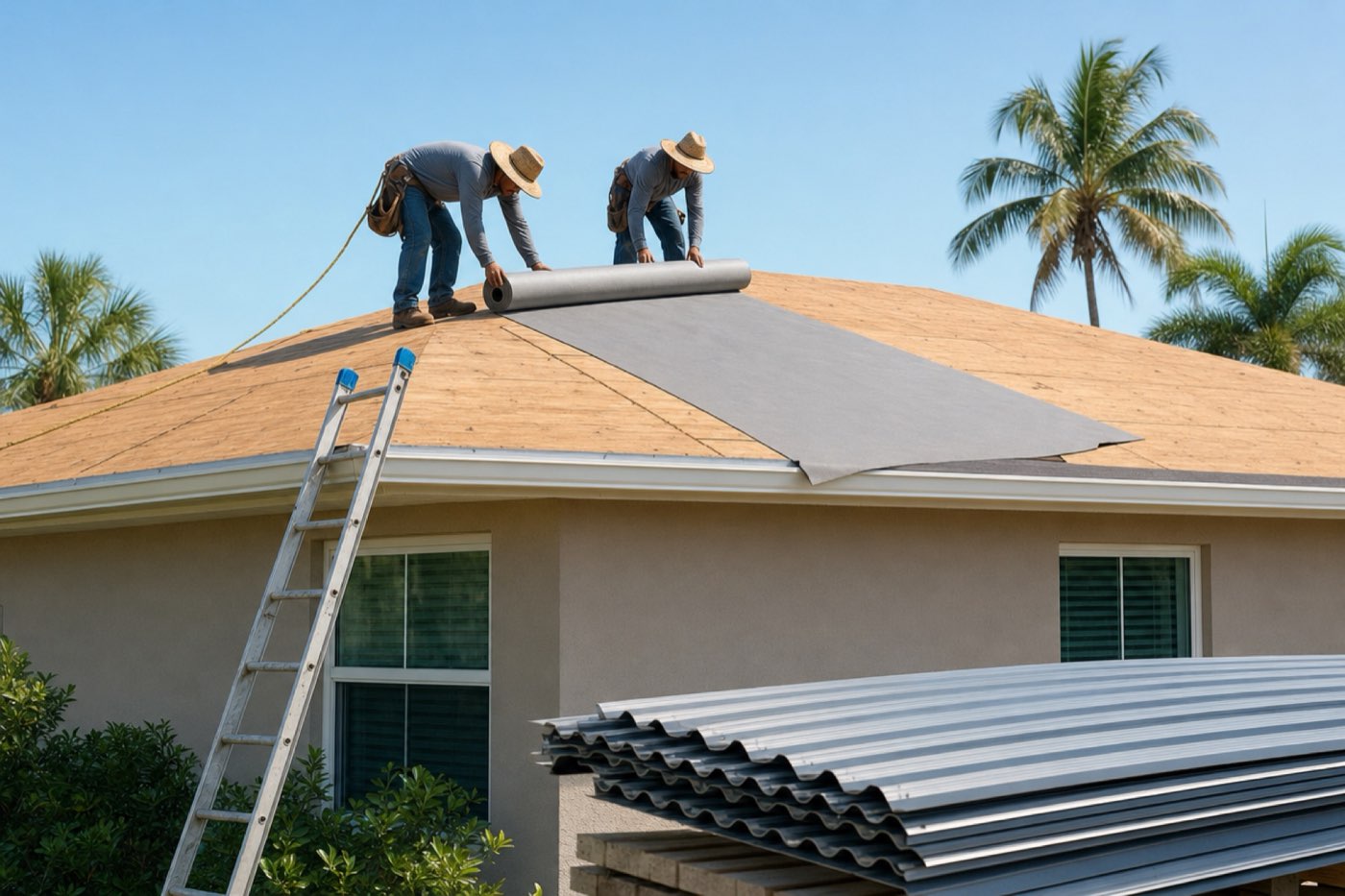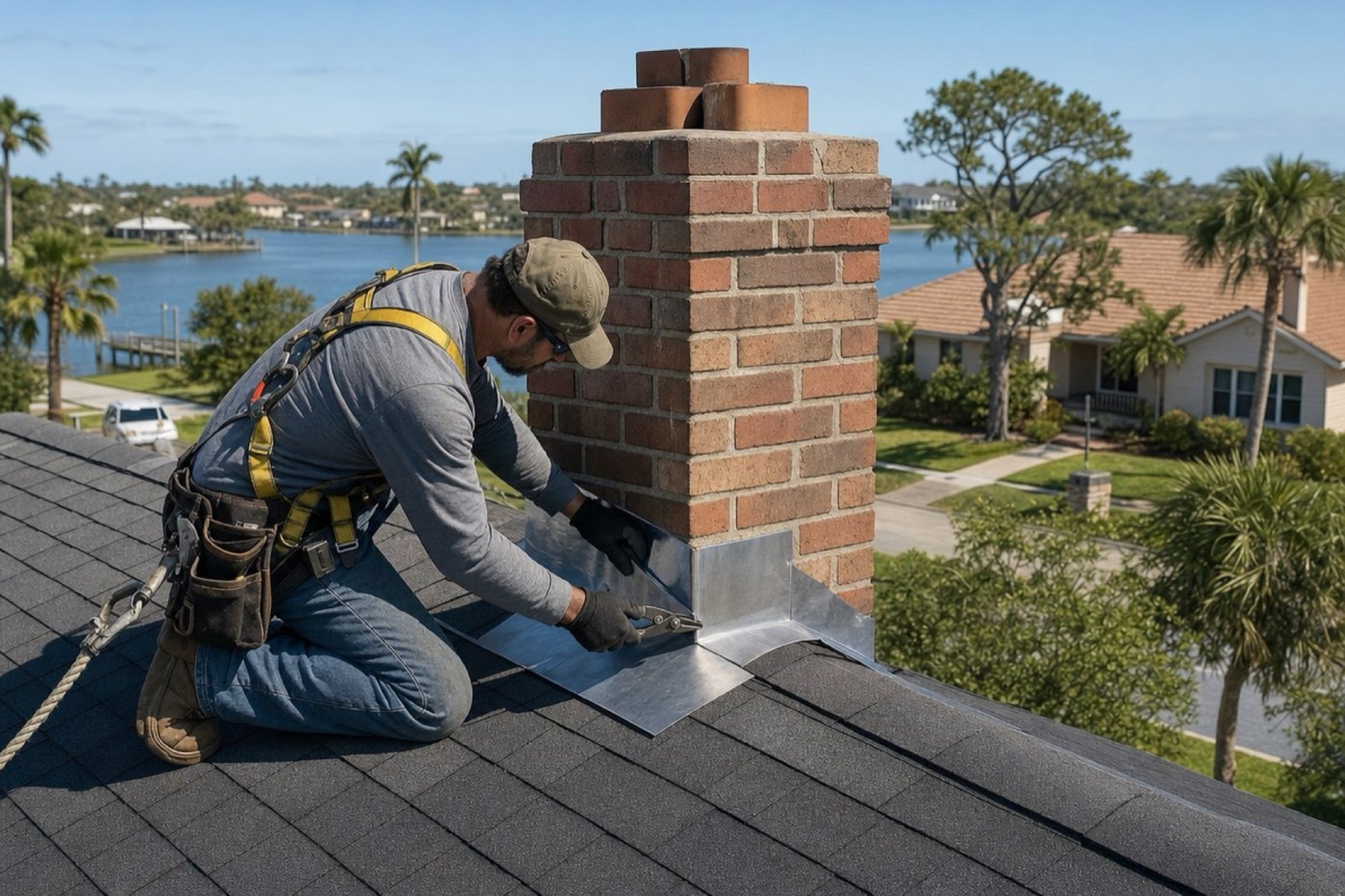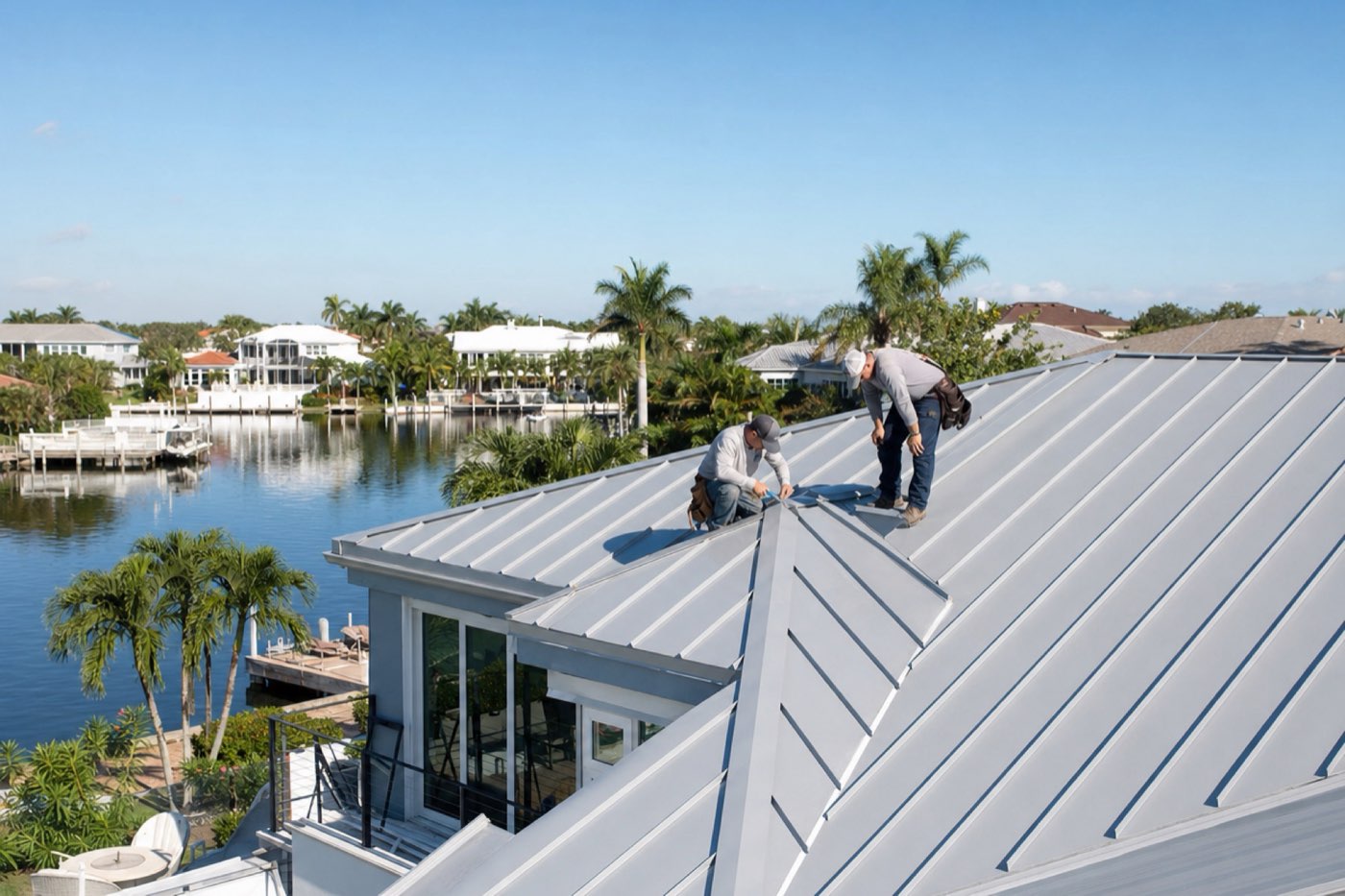
If your Tampa Bay house is within 3,000 feet of saltwater, ask contractors to price aluminum metal panels and to specify corrosion-resistant fasteners for every screw on the roof. That 3,000-foot line comes from the Florida Building Commission's 2026 Florida Building Code change materials, and it applies to fasteners and connectors. The distance where a steel panel warranty stops applying is set by each manufacturer, so get it in writing for your address.
How close to saltwater is too close for a steel roof?
The only distance you can count on for every Tampa Bay address is the code's 3,000 feet from a saltwater coastline. Inside that distance, the roof's fasteners and connectors fall under a corrosion-resistance requirement.
Panel warranties work differently. Each manufacturer writes its own coastal exclusion for Galvalume and galvanized steel, and the distance can differ from one product to the next. The number that matters for your roof is the one printed in that product's warranty and installation guide.
Do this before you accept a quote: ask the contractor for the warranty document for the exact panel and finish, then find the coastal section. If your lot falls inside the stated distance, the steel option may not carry the coverage you expect.
Is aluminum the best metal roofing material near Tampa Bay?
For a house close to the water, aluminum is the material to price first. Corrosion from salt exposure is the reason the code sets a 3,000-foot rule, and an aluminum panel system pairs naturally with corrosion-resistant fasteners. Ask for aluminum quotes next to a steel quote so you can compare the written coastal coverage on each.
Aluminum panels are commonly quoted in .032 or .040 thickness. Have the thickness written on the estimate, along with the panel profile, the finish and the clip and fastener type.
Wind resistance is not decided by metal alone. It depends on panel profile, span, seam design, clip and fastener spacing, the roof deck, edge conditions and the tested assembly. The product also needs Florida Product Approval for the way it will be installed on your roof.
If you like the clean look and long panel runs of standing seam metal roofs, ask for the approved coastal version of that system rather than a standard inland one.
What does the Florida Building Code require for fasteners near the coast?
Within 3,000 feet of a saltwater coastline, fasteners and connectors must meet the code's corrosion-resistance provisions. The exception is hardware fully embedded in concrete or mortar, according to the same 2026 code change materials.
The code also says screws, bolts and nails must be corrosion resistant, either by their composition or through an approved coating or galvanization listed in the code table. Where that table calls for stainless steel, the stainless fasteners are specified as ASTM A240 Type 304, Type A305 or Type 316.
Here is how that plays out for a homeowner:
| Where the hardware is | What the code materials say |
|---|---|
| Within 3,000 feet of saltwater coastline | Fasteners and connectors must meet the corrosion-resistance provisions |
| Fully embedded in concrete or mortar | Excepted from that requirement |
| Where the code table requires stainless | ASTM A240 Type 304, Type A305 or Type 316 |
| Metal roofing attached directly to steel framing | Approved fasteners are required, per Florida roofing guidance |
The last row comes from the Commission's residential roofing materials guidance.
Do you need stainless steel screws on every coastal metal roof?
Not automatically. The code lets other approved corrosion-resistant materials and coatings satisfy the rule where the table allows them, and stainless is required where the table says so. What you should insist on is that your contractor names the fastener material and the code table basis for it in the proposal.
For higher-exposure roofs, the Commission's fastener corrosion investigation points to stainless steel, copper and silicon-bronze coatings as recommended choices. If your house is a few hundred feet from a canal or the bay, that recommendation is a good reason to choose stainless and not the cheapest approved option.
Because the 2026 materials are a summary of changes, your contractor and the permit office will work from the adopted code text in effect on your project date.
What should you do this October?
Late October is a sensible time to line up a coastal roof job, especially if you are repairing or replacing after last season's storms. Our page on roof work after Helene and Milton covers what many Tampa Bay homeowners are sorting out now.
- Check your distance. Use a map to measure from your roof to the nearest saltwater shoreline, including tidal canals, and note whether you are inside 3,000 feet.
- Ask for two material options. Request an aluminum quote and a steel quote on the same profile, with thickness, finish and fastener type listed.
- Get the warranty and installation guide in writing. Find the coastal distance clause for the exact product and finish, and confirm your address is covered.
- Confirm the fastener spec. It should name the material, such as Type 304 or Type 316 stainless, and match the code table.
- Confirm product approval. Ask which Florida Product Approval applies to the panel system as it will be installed on your roof.
What does permitting add to a coastal metal roof?
The City of Tampa handles roof covering replacement permits through its Construction Services department. Permit fees include a Florida Building Permit Surcharge of 2.5 percent of permit value or a $4 minimum, according to the city's fee schedule.
The city's online fee estimator does not set your final cost, because that is determined once plan review is complete. Our Tampa roof permits page walks through the process, and the metal roof cost page explains what moves a total price.
If you have a roof that is already installed and you suspect fastener rust or panel problems, metal roof repair is a separate question from replacement, and a contractor can tell you which applies.
Frequently asked questions
The most common follow-up questions are answered in the FAQ below.
If you want help comparing coastal options, call (813) 680-5909 or send a request. Metal Roofer Tampa is a free referral service that connects you with a licensed local roofing contractor.