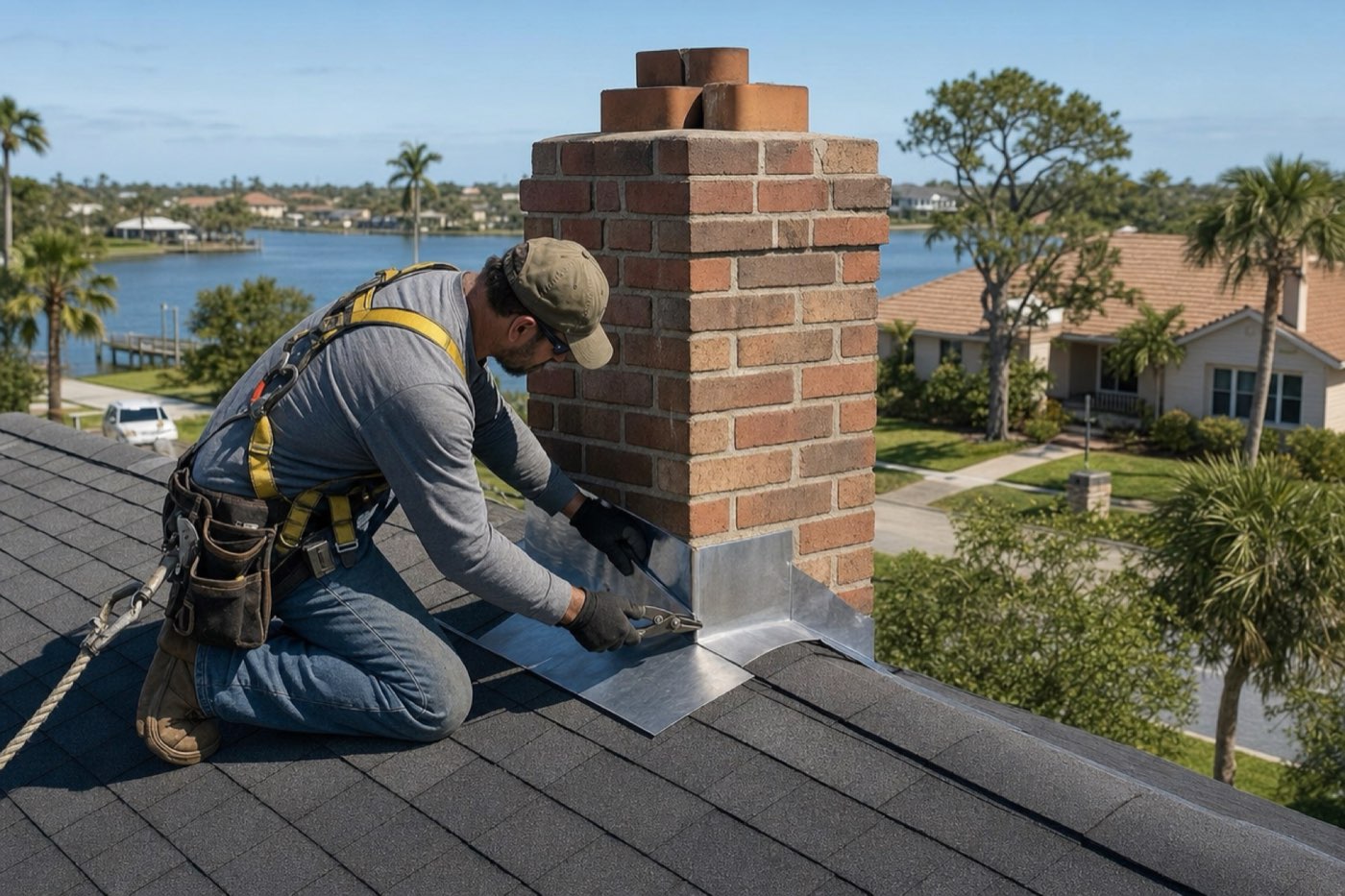
Plan on roughly $300 to $1,000 to fix roof flashing around vents, valleys or chimneys in Tampa as of October 2026. Replacement flashing has to meet Florida Building Code Table 1503.2, which lists 0.024 inch for aluminum, 26-gauge G90 for galvanized steel and 28 gauge for stainless steel. Because Tampa Bay air carries salt, aluminum or stainless steel is the smarter choice for most replacement pieces.
How much does it cost to fix roof flashing in Tampa?
For a typical repair at a plumbing vent, a valley or a chimney, $300 to $1,000 is a reasonable planning range. Treat it as a budgeting figure, not a fixed price list, because each roof is different.
Where your job lands in that range depends on:
- How easy the roof is to reach, and how tall and steep it is
- The flashing material you choose
- The size of the chimney and how many sides need flashing
- Whether summer water has rotted wood underneath
- Whether surrounding roofing must be lifted and put back
A single vent boot sits at the low end. A chimney with several sides, or a long valley, pushes toward the high end. If rot is found under the flashing, expect a separate line item on top of the flashing work. Get the estimate in writing, with the metal named.
For a broader look at pricing, see the page on metal roof costs in Tampa.
What does the Florida Building Code require for flashing?
Section 1503.2.1 of the Florida Building Code requires flashing at wall and roof intersections, gutters, changes in roof slope or direction, and roof openings. It also requires metal flashing to be corrosion-resistant and no thinner than Table 1503.2 specifies. That language comes from the Florida Building Commission's staff analysis of the flashing provisions.
That covers every spot you are likely to be repairing: vents (roof openings), valleys (changes in direction) and chimneys (wall and roof intersections). The same document gives the table minimums:
| Flashing metal | Table 1503.2 minimum |
|---|---|
| Aluminum | 0.024 inch |
| Galvanized steel | 0.0179 inch, 26-gauge zinc-coated G90 steel |
| Aluminum-zinc-coated steel | 0.0179 inch, 26-gauge AZ50 aluminum-zinc-coated steel |
| Stainless steel | 28 gauge |
Notice the galvanized entry is not just "26-gauge steel." The table calls for zinc-coated G90 steel, so the coating is part of the requirement.
Is there one gauge that applies to every flashing metal?
No. The table gives a thickness or gauge for each material, and those numbers do not line up across metals. Aluminum is listed in inches (0.024), while galvanized and aluminum-zinc-coated steel are listed at 26 gauge and stainless steel at 28 gauge.
So when a contractor says "26-gauge," ask which metal and which coating. Put the material, coating and thickness on the estimate so you can compare bids on equal terms.
Why do Tampa Bay homes do better with aluminum or stainless steel?
Salt in coastal air attacks exposed metal, and the code requires flashing to be corrosion-resistant. Homes close to the bay, the Gulf or tidal waterways see that exposure year-round.
Galvanized and aluminum-zinc-coated steel rely on a metal coating over a steel core. Aluminum and stainless steel are both listed in Table 1503.2 on their own, which makes them the practical picks when you want a replacement piece to last in salty air. Ask your contractor to price both and tell you which fits your address and your existing roof metal.
If your roof is metal, matching the flashing to the roofing is worth a conversation. A repair on a metal roof should use flashing that suits the panels around it.
Why is October a good time to fix flashing?
October marks the move toward Tampa's dry season, so roofs spend more days dry and repair work is easier to schedule. It is also when summer leak damage shows itself: stained ceilings, damp attic decking or soft spots around a vent.
Fixing flashing now means the seam is sound before the next heavy rain returns. If you had a leak this summer, check the attic after the next rain and note where water traveled. That gives the contractor a starting point.
What has changed in recent Florida code editions?
The 2023 Florida Building Code took effect statewide on December 31, 2023, according to the Florida Building Commission. In its 2023 roofing code-change detail, the Commission describes a modification that removed a requirement to cover certain valley-metal flanges and metal step flashing at wall abutments with both flashing cement and membrane.
The Commission has also published 2026 code-change materials that revise Chapter 15, including Sections 1503.2 and 1503.2.1. Ask your contractor which code edition applies to your permit date and whether it changes the flashing details on your roof.
Do you need a permit for a flashing repair?
It depends on where your home sits. The City of Tampa points residents to its construction permits and inspections service for permit, inspection and plan-review information. Unincorporated Hillsborough County and other cities can use different procedures and portals.
Have your contractor confirm the permit requirement for your exact address before work starts. Our page on Tampa roof permits explains the process in more detail.
What should you ask before approving the repair?
- Which metal will be used, and what is its thickness or gauge and coating?
- Does that match or beat the Table 1503.2 minimum for that metal?
- Is the metal corrosion-resistant enough for salt air at your address?
- Will the estimate list separate pricing for any rotted wood found underneath?
- Who confirms whether a permit is needed?
A clear answer to each question tells you the quote is built on the code, not on guesswork.
If you want to be connected with a licensed local roofing contractor, call (813) 680-5909 or send a request. Metal Roofer Tampa is a free referral service, and the work is done by independent contractors.